Reference project
Reference: PV thermography Fernitz-Mellach
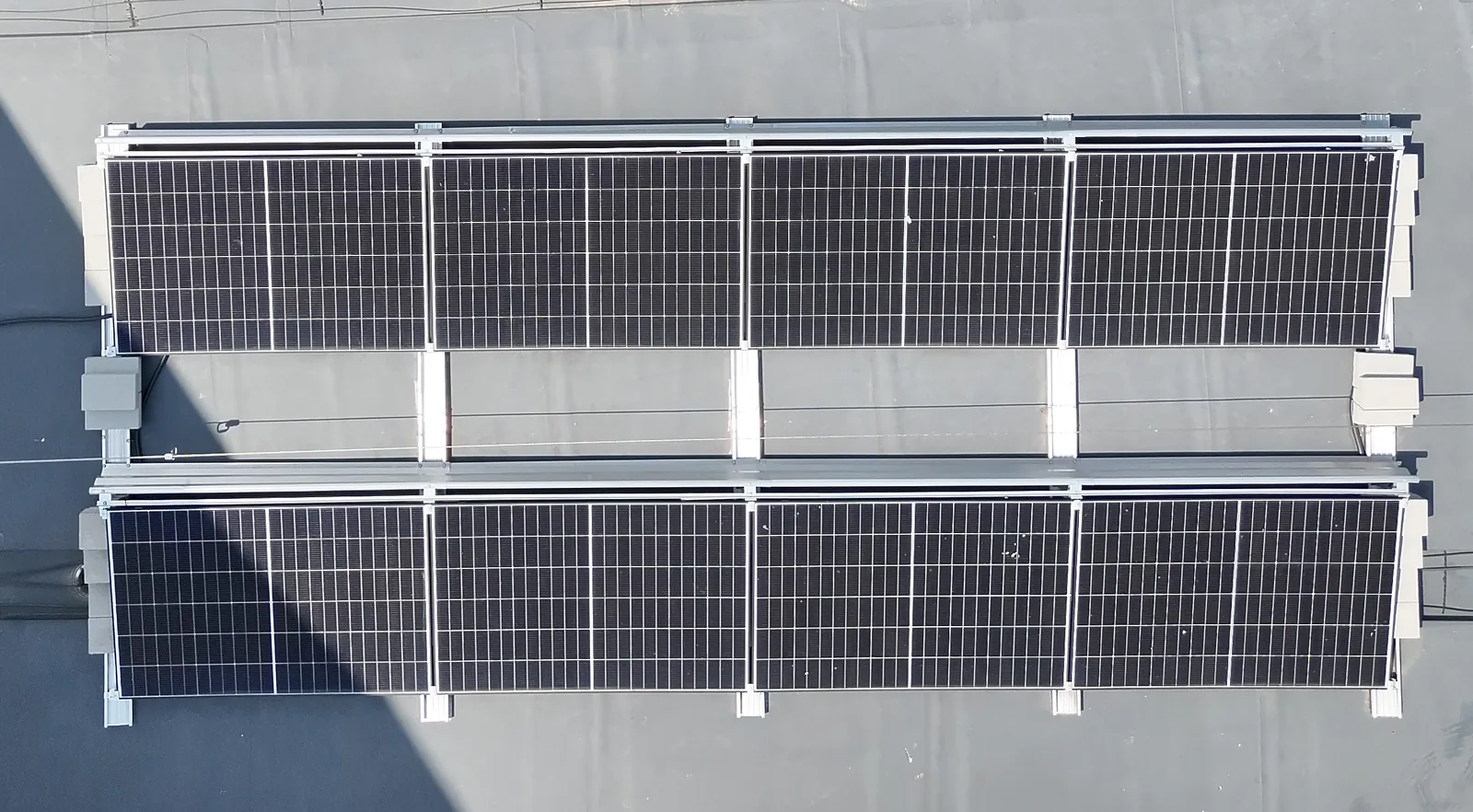
Thermal inspection of the photovoltaic plant of the municipality of Fernitz-Mellach, flown to IEC TS 62446-3, with test report and plant sketch.
- Object
- Plant of the municipality of Fernitz-Mellach, Styria
- Method
- Aerial thermography to IEC TS 62446-3, irradiance 650 W/m², flight height 10 m
- Equipment
- DJI Matrice 4TD with radiometric thermal camera and RTK
- Result
- no finding above the level normal, test report and plant sketch with module numbering
Starting point
The municipality of Fernitz-Mellach wanted to know whether the modules of its plant were working properly, without scaffolding, without walking the roof and without shutting the plant down. Seen from below, a module with a defective cell looks exactly like a healthy one. The difference only becomes visible through temperature.
How it was done
The flight took place in August at an irradiance of 650 W/m². IEC TS 62446-3 requires at least 600 W/m² for a reliable statement, so the conditions were met. Flight height was 10 m, flown with the DJI Matrice 4TD and a radiometric thermal camera.
That gives 10,1 mm per pixel. With a cell edge of 156 mm this is around 15 pixels per edge, while the standard asks for at least 3 x 3 pixels per cell. The resolution was therefore well above the requirement.
Of the 8 modules in two rows, 6 could be assessed in full. Two modules stayed outside the assessment because of shading. That is stated in the report and not quietly counted in.
Result
No module was above the level normal. There was no hotspot, no conspicuous fault pattern and no finding that would have required action.
Soiling of the module surfaces was visible. The report contains a cleaning recommendation for this, explicitly as a recommendation and not as an obligation.
What the municipality received
- test report with the measurement conditions and the normalisation of the temperature difference to 1000 W/m²
- plant sketch with module numbering that stays the same for every further flight
- five documented image pairs, visible spectrum and thermal image of the same detail
- each assessed module classified in the five categories from normal to critical
Why a report without findings is still worth something
A report without findings is not a report without value. It records the initial condition, and that is exactly what makes it possible to measure in two or three years what has changed. For a municipality it is the proof that the plant is being monitored, by someone who did not build it and who earns nothing from a finding.