Hidden defects in photovoltaic systems, buildings and technical equipment often remain unnoticed for a long time and gradually cost performance or money. High-resolution aerial thermal imaging makes these anomalies visible before they cause major damage. The inspection is contactless and the system does not need to be shut down.
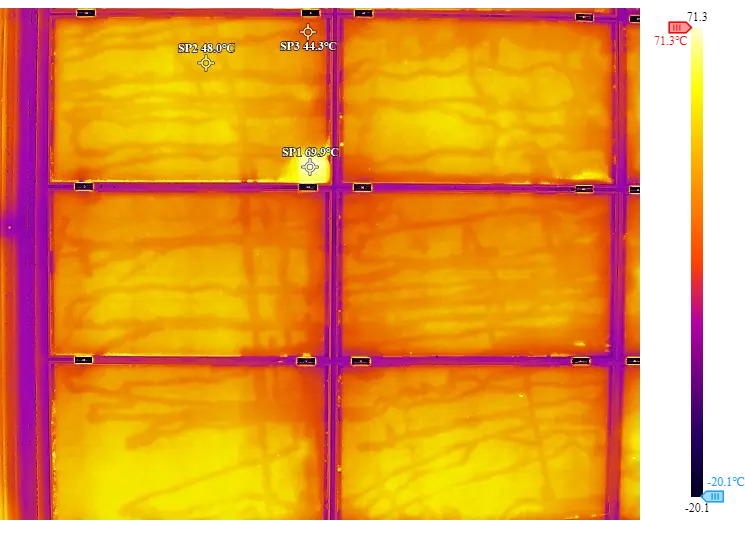
On photovoltaic systems, we identify hotspots, defective modules, interrupted strings and wiring faults through their thermal signature. The evaluation follows IEC TS 62446-3. You receive a clear inspection report documenting all anomalies, ready to share with your electrician or installer.
On buildings and technical equipment, thermal imaging also reveals heat loss, signs of moisture and unusually warm electrical components. Operators, installers and homeowners therefore receive a reliable basis for targeted action.
This short video shows how a thermographic inspection works:
Your benefits
- Find defective PV modules, hotspots and microcracks and safeguard the full output of your system
- Reveal thermal bridges and insulation damage, reduce heating costs and protect the building fabric
- Detect overheated technical equipment and pipelines early and prevent expensive failures
- Completely non-destructive, with no scaffolding and no system shutdown
Applications
PV inspection · Buildings & façades · Technical equipment & pipelines
How it works
- 01Initial contact & scope consultation
- 02Flight planning & appointment
- 03On-site thermographic drone flight
- 04Evaluation & inspection report within 48 hours
Suitable for
PV installers · Property managers · Industrial companies · Insurers · Experts & assessors · Homeowners
A single defective module can noticeably reduce your yield. We find it quickly, precisely and with complete documentation.